1. World and Reality¶
Die Welt ist alles, was der Fall ist
– Ludwig Wittgenstein
Introduction: Resonance¶
When we look around in our world, we encounter a lot of stuff in it: chairs, telephones, planes, trains, or automobiles. However, this stuff means something to us: we can use a chair to sit on, or a train to get from A to B.
However, apart from this more functional meaning, the stuff we encounter also has a particula meaning for us: my telephone means something to me, as yours does to you. However, the meaning I attach to my telephone is (in all likelihood) different from the meaning you attach to yours.
And it is probable that you have some stuff that only has a meaning, a significance for you, like a stone you picked up when you were a kid, some poster or design you created when you were a juvenile. Or there are things that mean something to you and to people like you, or you gravitate towards (kind of) people that attach (kind of) the same significance to the same (kind of) objects...
All this leads us to conclude that the world we experience is something different than the object we encounter in it. In this first session, we are going to investigate the way this works. In so doing, we will look into resonance as a meaningful way of relating to the world.
Examples¶
William Forsythe: Nowhere and Everywhere at the Same Time
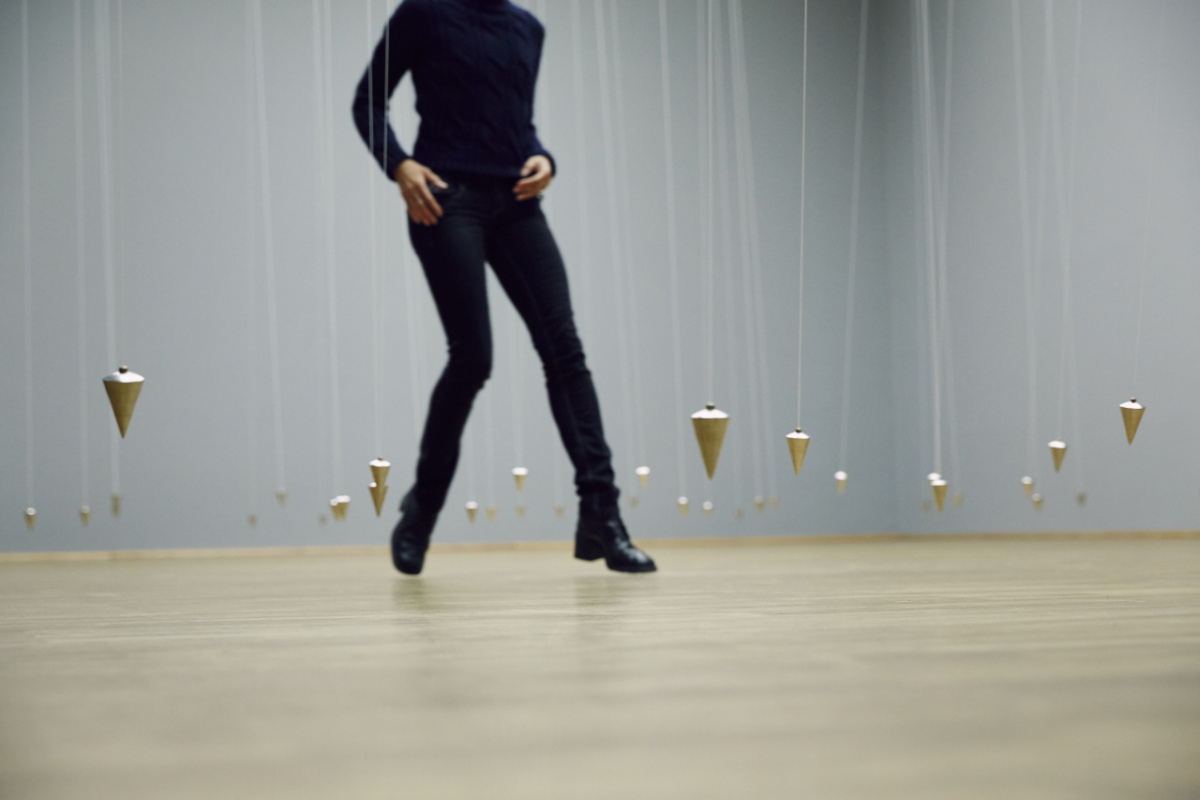
Suspended from automated grids, more than 400 pendulums are activated to initiate a sweeping 15 part counterpoint of tempi, spacial juxtaposition and gradients of centrifugal force which offers the spectator a constantly morphing labyrinth of significant complexity. The spectators are free to attempt a navigation this statistically unpredictable environment, but are requested to avoid coming in contact with any of the swinging pendulums.
See this installation on youtube
Read the description by William Forsythe
William Forsythe: The Fact of the Matter
The Fact of Matter is a choreographic object. The object is not so much there to be seen, as to be used. An engagement with the object offers the visitor a possible re-assessment of their mass, strength, and coordination skill as a unified system.
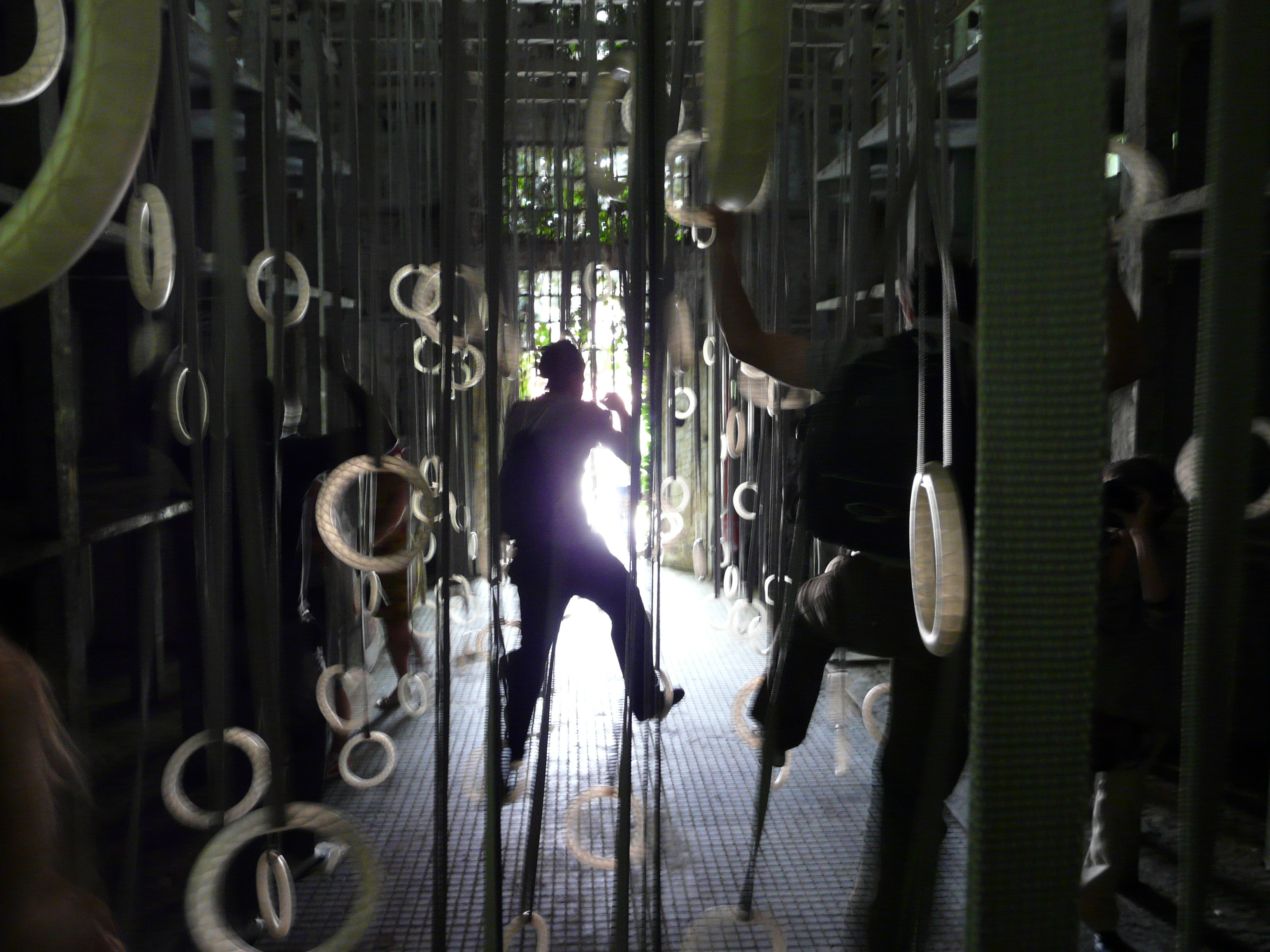
See this installation on youtube
Read the description by William Forsythe
William Forsythe: City of Abstracts
Through trial and error, viewers learn how to activate themselves in order to know more about their role in the construction of the images on the screen. What results are inadvertent choreographies, initiated through inquiry, not intent.
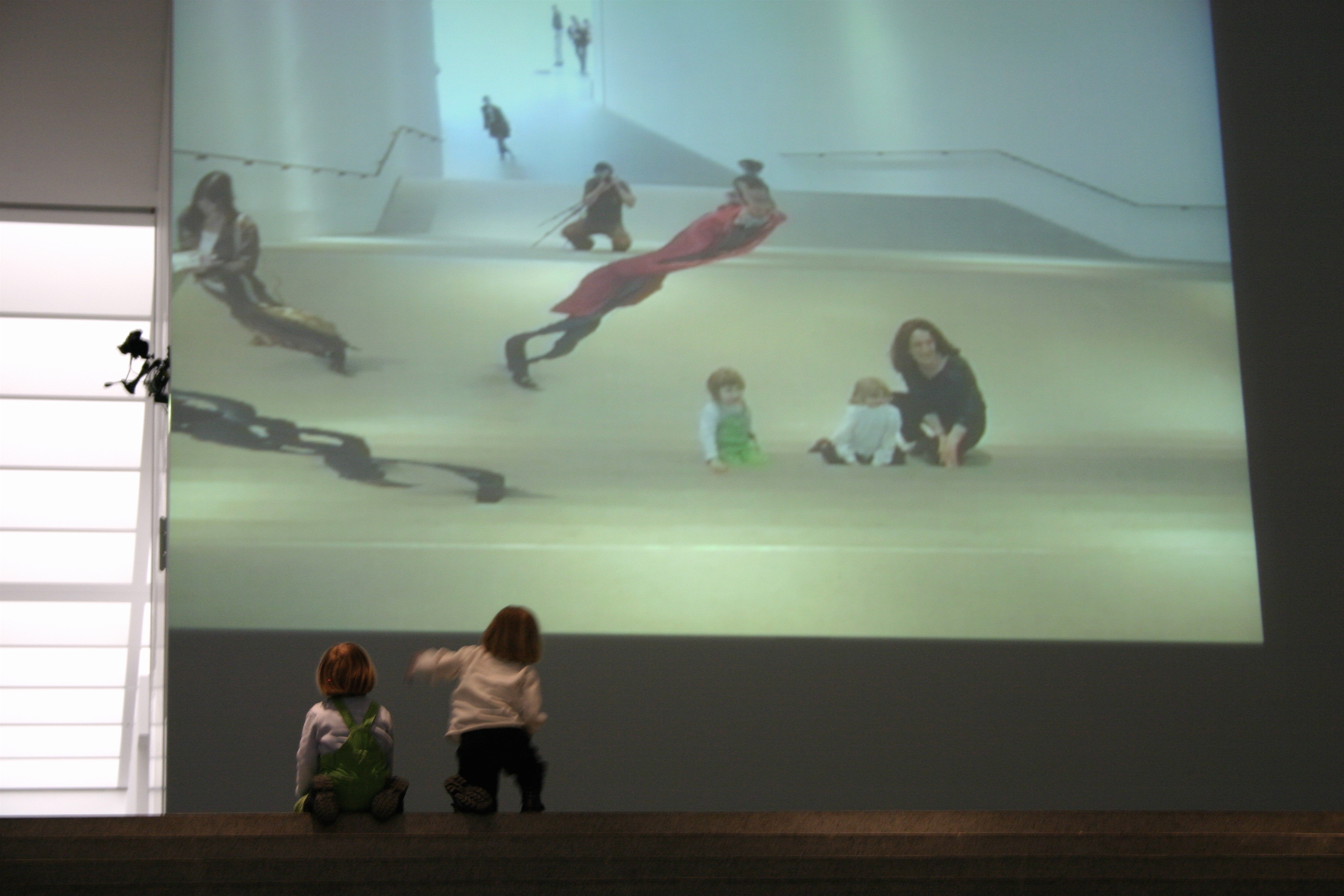
See this installation on youtube
Read the description by William Forsythe
Lectures¶
John Cage about Silence
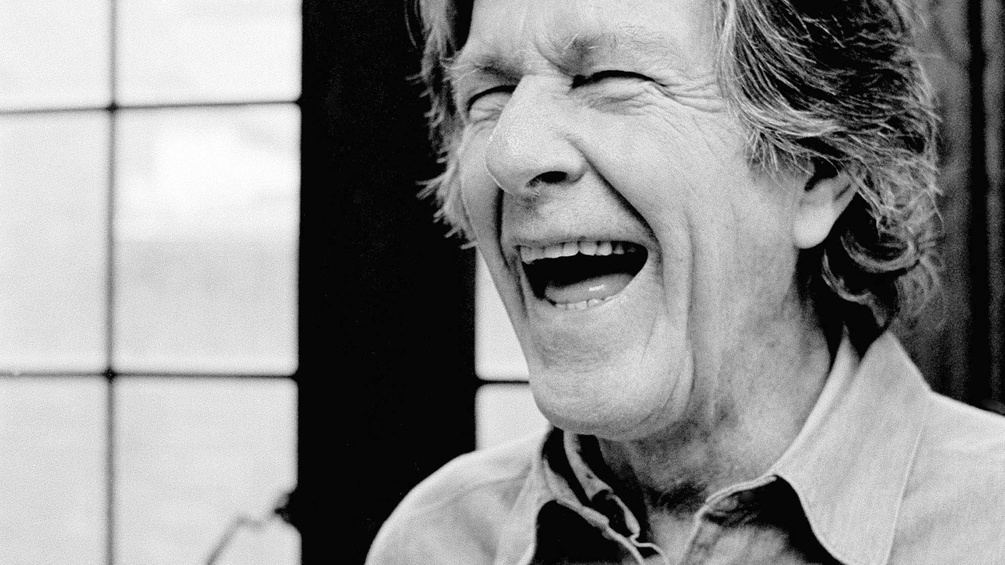
John Cage is the composer of the famous piece 4'33". With this work, he questions the role of silence in music. At the time of its conception, Cage was studying Zen Buddism under Daisetz Suzuki, which led him to conclude that "each and every thing in all of time and space is related to each and every other thing in all of time and space". In this interesting lecture on youtube, he talks about the role of silence in his philosophy and musical compositions.
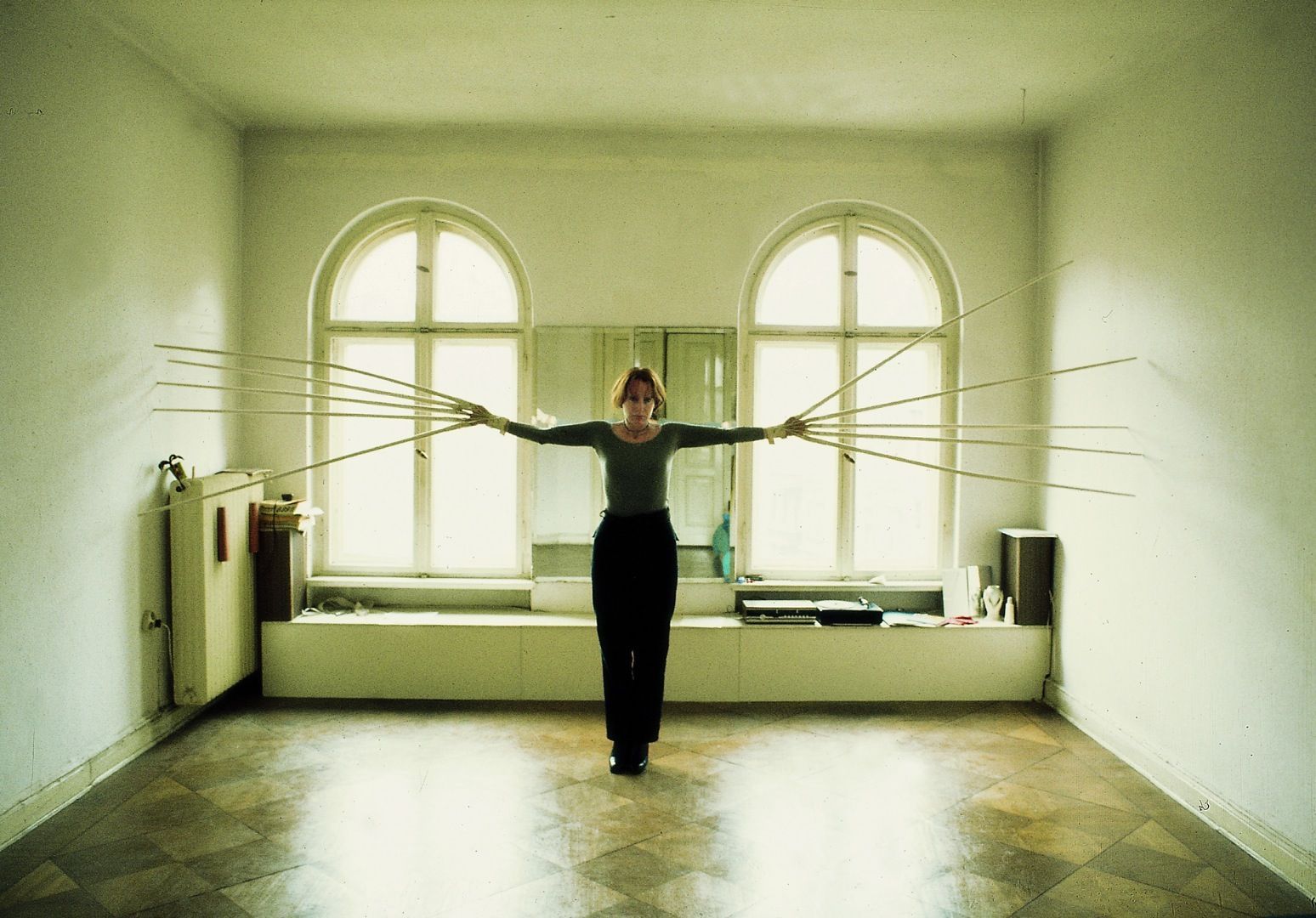
Tate Collective: Rebecca Horn – Body Extensions and Isolation
Rebecca Horn was a German visual artist best known for her installation art, film directing and body modifications such as Einhorn (Unicorn), a body-suit with a very large horn projecting vertically from the headpiece wikipedia. In this video on youtube, Joey from Tate Collective London presents her perspective on this performative artwork.
Sonic Acts: Philip Vermeulen on making More Moiré r Philip Vermeulen on the making of More Moiré (Sonic Acts). See this presentation on youtube.

Literature¶
-
Rosa, H., 2018, The Idea of Resonance as a Sociological Concept
-
Rosa, 2022:
- §IV.3: Kognitieve Landkarten und kulturelle Weltbilder (pp.215-225; English edition: Cognitive Roadmaps and Cultural Worldviews, pp.126-132).
- §IV.4: Landkarten der Bewertung und des Begehrens (pp.225-235; English edition: Roadmaps of Desire and Evaluation, pp.132-138).
- §V.3: Resonanz (pp.281-299; English edition: Resonance, pp.164-174).
- §V.4: Entfremdung (pp.299-316; English edition: Alienation, pp.174-184).