5. Presence and Absence
Daar waar leegte ruimte schept / ontstaan de mooiste dromen.
– Inge Zwerver
Introduction: The narrative
When we tell or create stories, we always present things, but also leave things out: the things we do not tell about, that we make not explicit or that we ignore. However, these omissions are just as much part of the story as the things that we do tell.
Sometimes, making these left-out parts of the story explicit can create a novel (and often beneficial) view on the narrative; and again, it is the arts that can make the implicit explicit – bring forth the hidden, or hide the explicit.
We have several artistic (literary, creative, ...) practices at our disposal to accomplish such a feat:
-
satire: vices, follies, abuses, and shortcomings are held up to ridicule, often with the intent of exposing or shaming the perceived flaws of individuals, corporations, government, or society itself into improvement. Although satire is usually meant to be humorous, its greater purpose is often constructive social criticism, using wit to draw attention to both particular and wider issues in society. (wikipedia).
-
irony: a juxtaposition of what appears to be the case with what is actually or expected to be the case. Originally a rhetorical device and literary technique, irony has also come to assume a metaphysical significance with implications for one's attitude towards life. (wikipedia)
-
parody: a creative work designed to imitate, comment on, or mock its subject by means of satirical or ironic imitation. Often its subject is an original work or some aspect of it, but a parody can also be about a real-life person, an event, or a movement. (wikipedia)
-
exegeration: the representation of something as more extreme or dramatic than it is. In the arts, exaggerations are used to create emphasis or effect. (wikipedia)
-
pastiche: a work of visual art, literature, theatre, music, or architecture that imitates the style or character of the work of other artists. Unlike parody, pastiche pays homage to the work it imitates, rather than mocking it. (wikipedia)
Examples
There are, of course, a lot of examples that play with irony, sarcasm, satire, etc. However, when you work with art (in the most general sense of the word), is sometimes (often) is not completely or immediately clear if a piece is meant to be ironic, or did the artist mean the work in a more serious way. And, more general, when does a work of art really convey a story, a narrative...?
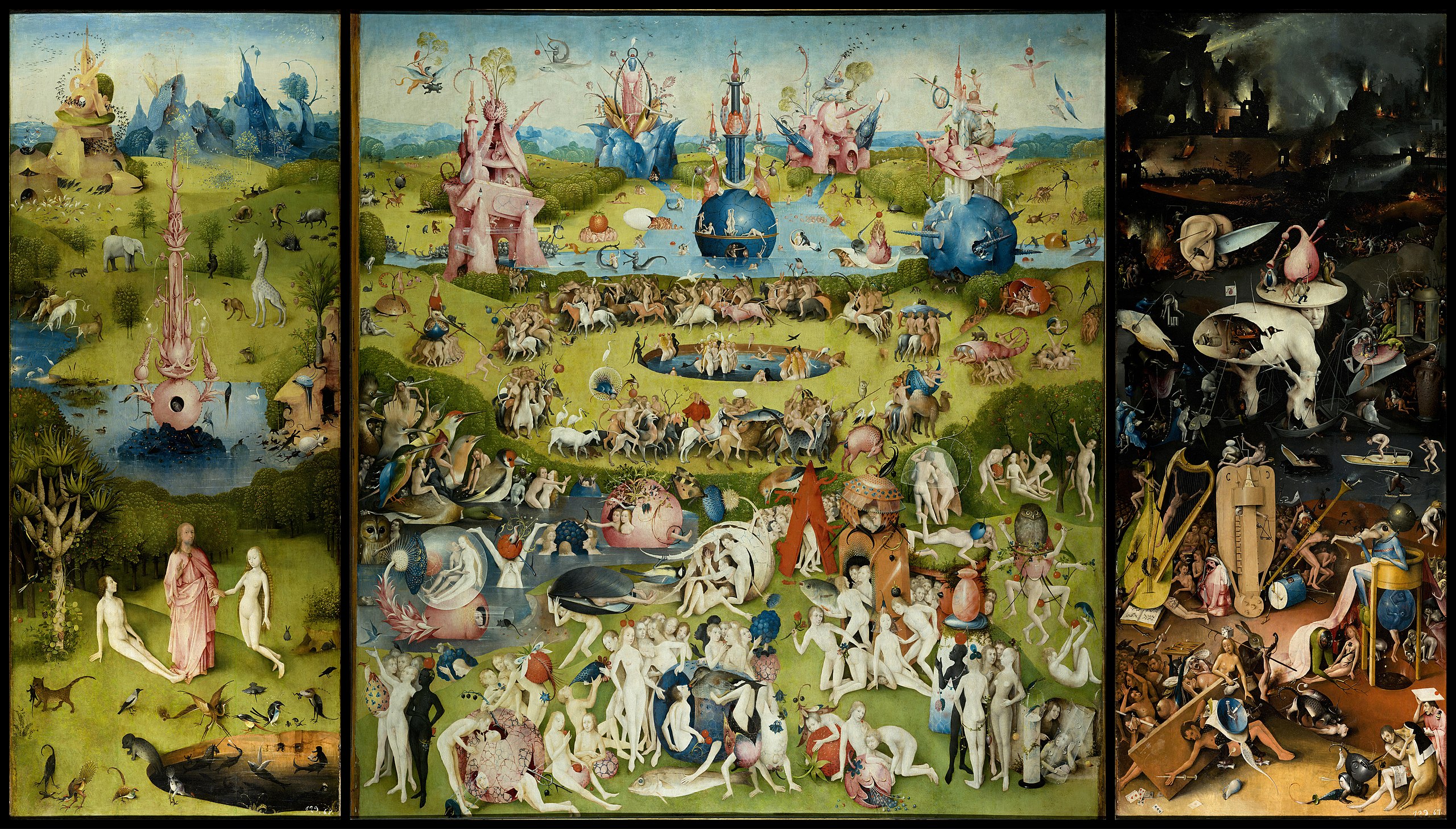
Look, for example, at Jeroen Bosch' Tuin der Lusten (The Garden of Earthly Delights). There are a lot of narratives going on in this triptec; but do you think Bosch is to be taken literal here? Or is he working in a metaforical sense, or ironic...?
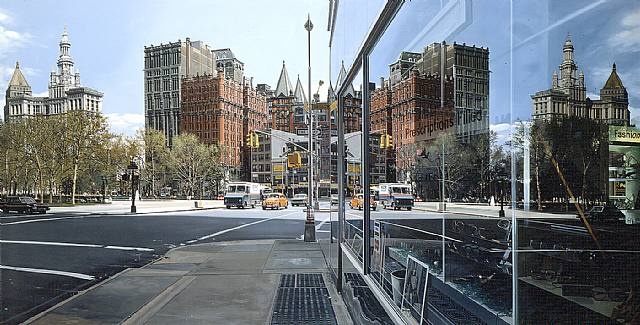
Bosch, of course, worked in the early Modern period (he died around 1516), but what about more contemporary artists like Jeff Koons, Richard Estes or Cor Groenenberg?
Lectures
Literature
- Resonant storytelling
- Resonance, pp.145